 Collector
Domaine Kalliste
Réserve Magnum Cru
Messenia, Peloponnese · 1.5 L in ceramic
$120.00$240.0050% off5.0out of 5 from 41 reviews
Peloponnese, Crete, Chalkidiki
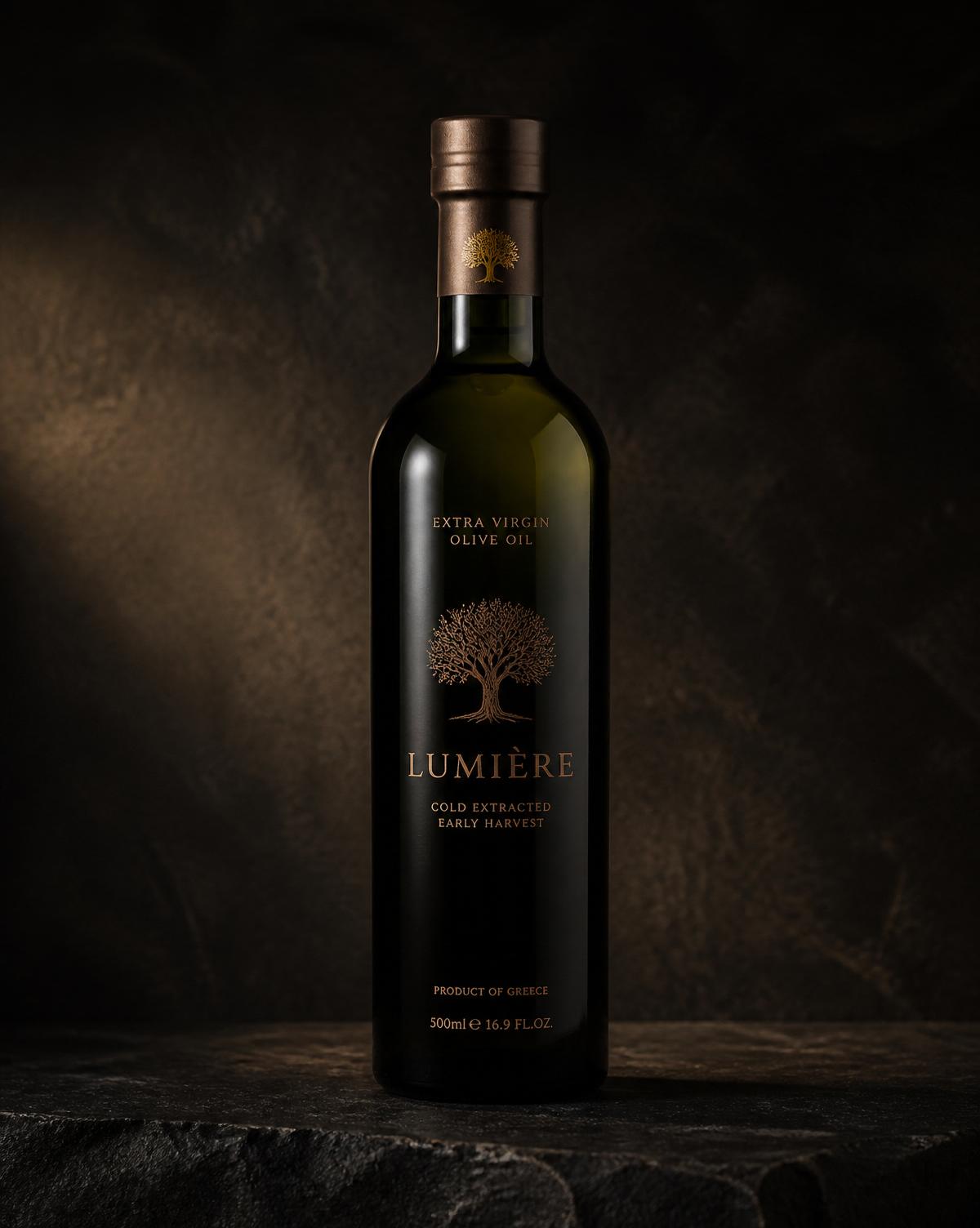
Greek extra virgin olive oil is dominated by one cultivar, Koroneiki, which accounts for the large majority of plantings in the Peloponnese and Crete. It is a small, oil-rich olive that ripens early and delivers a green, herbal, distinctly peppery oil with naturally high phenolic content. Greece also has an unusually high proportion of extra virgin within its total production, and a domestic culture of buying oil by the tin from a known grower — which is why so many Greek oils reach the US with harvest dates that are genuinely current.
CollectorDomaine Kalliste
Messenia, Peloponnese · 1.5 L in ceramic
Award winnerDomaine Kalliste
Messenia, Peloponnese · 500 ml

P.J. KABOS
Peloponnese · 6 × 16.9 fl oz (500 ml) glass bottles

P.J. KABOS
Kalamata, Peloponnese · 6 x 16.9 fl oz (500 ml) glass bottles

The Governor
Corfu, Ionian Islands · 500 ml × 12 bottles

The Governor
Corfu, Ionian Islands · 500 ml × 12 bottles

HYPERELEON
Peloponnese · 260 ml (8.8 fl oz) × 6 bottles

HYPERELEON
Peloponnese · 260 ml (8.8 fl oz) × 6 bottles

Kyoord
Peloponnese · 500 ml (16.9 fl oz) × 12 bottles

P.J. KABOS
Kalamata, Messenia, Peloponnese · 16.9 fl oz (500 ml) bottle × 6

P.J. KABOS
Peloponnese · 16.9 fl oz (500 ml) glass bottle

P.J. KABOS
Kalamata, Peloponnese · 16.9 fl oz (500 ml) tin
Messenia and Laconia in the southern Peloponnese produce classic Koroneiki with grass and green tea notes. Crete adds warmth and a rounder body. Chalkidiki in the north is better known for table olives but yields good oil from Chalkidiki and Koroneiki fruit.
PDO Kalamata covers oil from Messenia and remains one of the most consistent Greek designations.
Its herbal pungency suits tomatoes, feta, bean and lentil soups, grilled fish and horta. Add it off the heat where the aroma survives.
The harvest letter
One letter a month: tasting notes from our own panel, the estates we are visiting, and first refusal on limited single-tank releases.
No spam. Unsubscribe anytime.