How to Choose Extra Virgin Olive Oil
Élodie Marchand · Head of Sourcing, IOC-trained panel taster · Updated 2026-08-02
Read the harvest date first. If there is no harvest date, put the bottle down — everything else on the label is unverifiable without it. Then check that a single country of origin is named, that the cultivar is stated, and that the oil is in dark glass or tin rather than clear plastic. Price per fluid ounce is your last filter, not your first: below roughly $0.70 per fl oz, early picking and fast milling are hard to fund. Finally, taste it raw on a piece of bread. Bitterness and a peppery catch in the throat are quality signals, not faults.
Step 1 — harvest date over best-before
A best-before date is chosen by the bottler and typically sits 18 to 24 months after filling. It tells you nothing about when the olives were picked. A harvest date does. Oil from the current or previous crop year is what you want; anything older is a discount purchase, not a quality one.
Step 2 — origin and cultivar
One named country beats a list of four. A named cultivar — Picual, Koroneiki, Coratina, Arbequina — tells you how the oil will taste before you open it. If the label names neither, the producer is asking you to trust a brand rather than a fact.
Step 3 — packaging and format
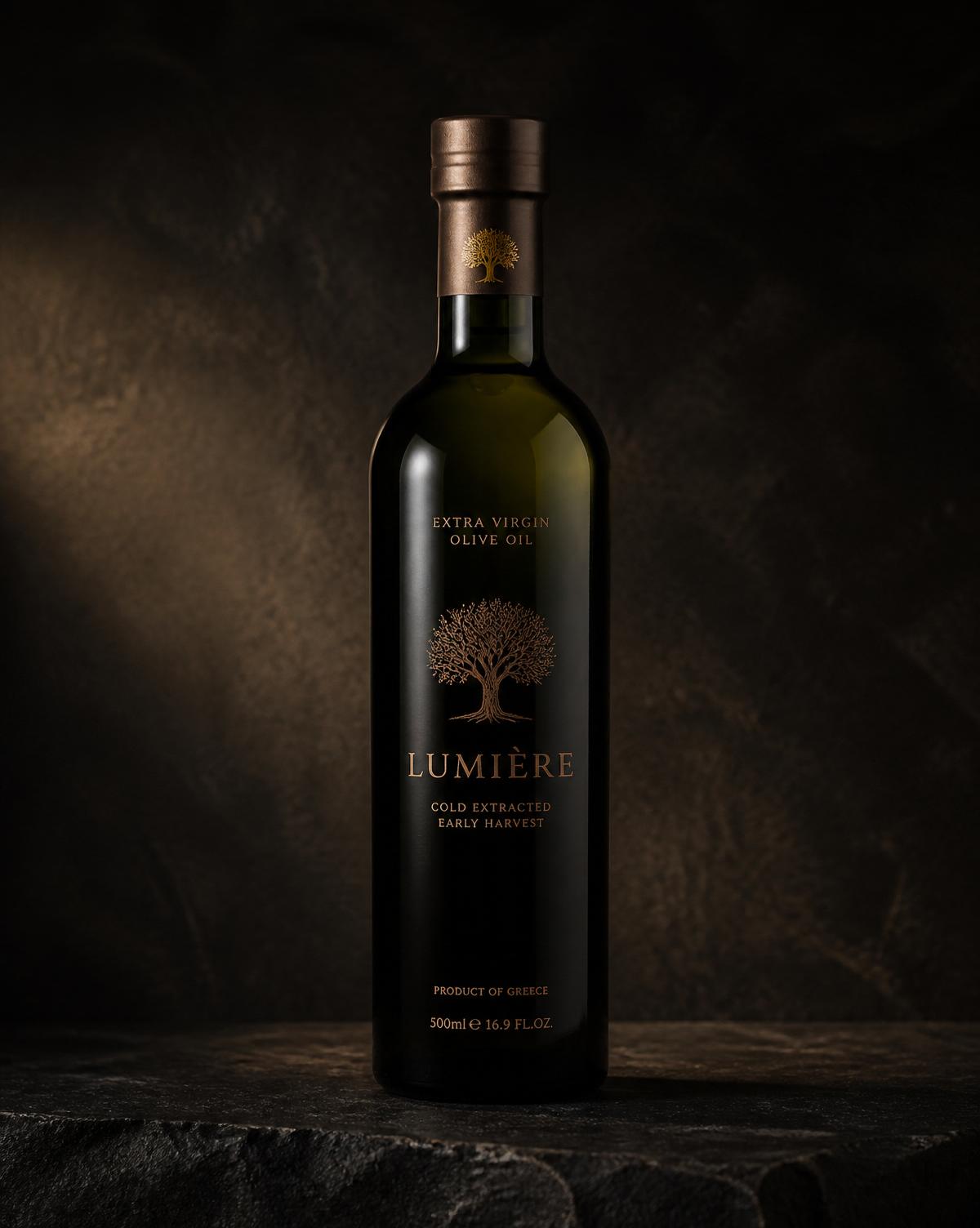
Dark glass, tin or bag-in-box protect against light. Clear glass on a lit shelf is the worst case. Buy a size you will finish within about three months of opening; two fresh 500 ml bottles beat one tired three-liter tin for most households.
Step 4 — taste before you commit
Warm a spoonful in your hand, smell it, then sip and draw air across it. You are looking for fresh green or ripe fruit aromas, a bitterness in the middle of the tongue and pungency in the throat. Musty, greasy, winey or cardboard notes are defects and disqualify the oil regardless of what the label claims.
Frequently asked questions
- What should I look for first on an olive oil label?
- The harvest date. Without it you cannot judge freshness, and freshness is the single biggest driver of quality in the bottle.
- Does dark glass really matter?
- Yes. Light drives oxidation faster than almost anything else in a home kitchen. Dark glass, tin and bag-in-box all protect the oil; clear bottles do not.
- Is supermarket extra virgin olive oil bad?
- Not inherently. Much of it is technically compliant but old and mildly tired. Judge the individual bottle by harvest date and packaging rather than the aisle it sits in.
About the author
Élodie Marchand — Head of Sourcing, IOC-trained panel taster. Élodie buys every oil OlivePrestige sells. She trained on an International Olive Council sensory panel in Jaén, spends eight weeks a year in mills between October and December, and has rejected more lots than she has bought.