Storage Guide
Storing olive oil properly: light, heat, oxygen and time
Four variables decide whether your bottle tastes the way the producer intended.
Élodie Marchand — Head of Sourcing, IOC-trained panel taster · 22 March 2026 · 7 min read
Light is the fastest destroyer
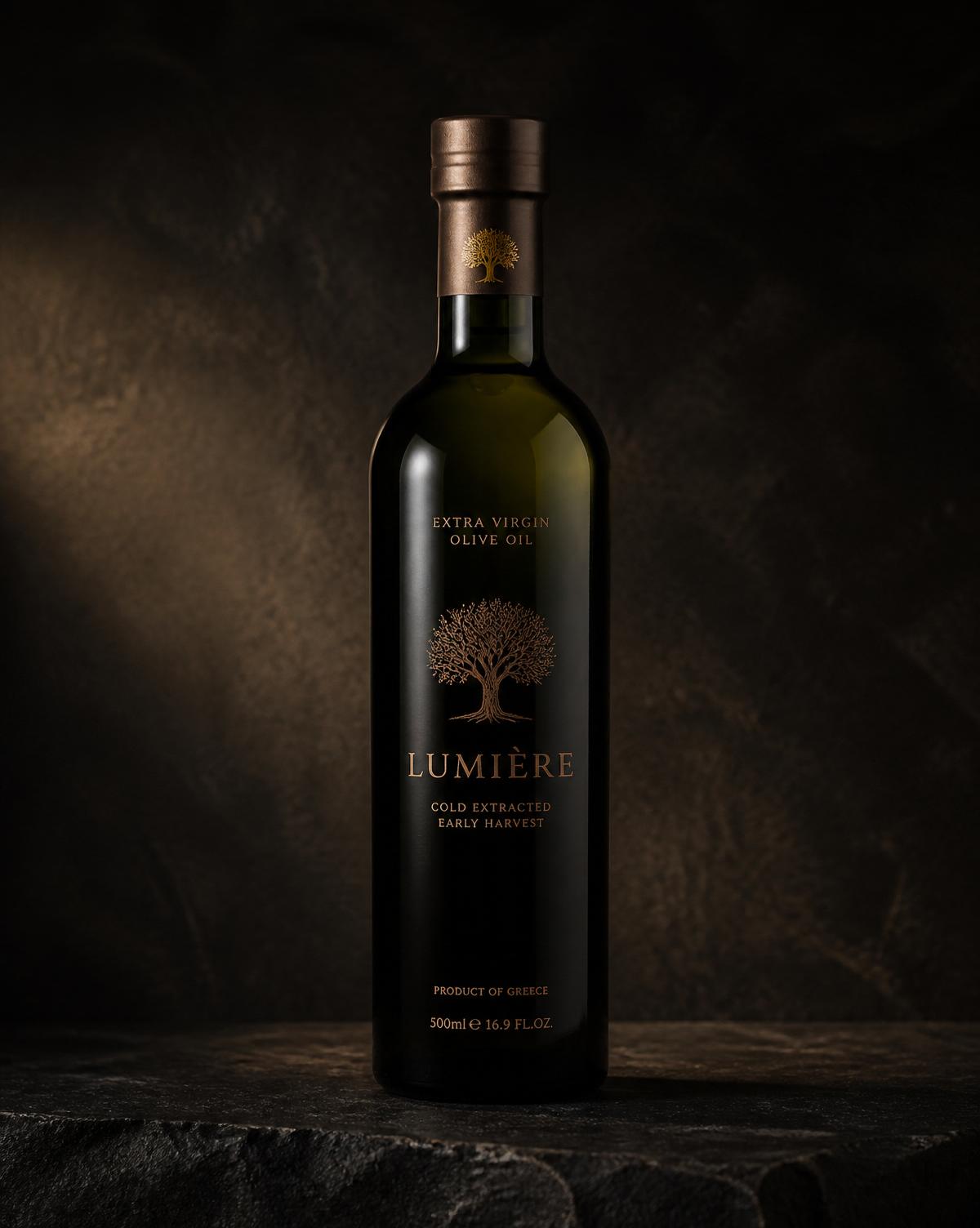
Photo-oxidation proceeds far faster than the slow oxidation caused by air alone. An oil in clear glass under retail lighting can lose a substantial share of its phenolic content within weeks, and the sensory difference is obvious in a side-by-side tasting.
This is why serious producers use dark green, violet or opaque glass, tins, or glazed ceramic. A beautiful clear bottle on a sunny windowsill is a design decision made at the oil's expense.
At home, the cupboard beats the countertop every time.
Heat, and where not to keep the bottle
Every ten degrees roughly doubles the rate of oxidative reactions. The worst place in any kitchen is beside the hob, which is also where most people keep their oil.
Aim for 14–18°C, stable. A cool cupboard, a cellar, a north-facing pantry. Refrigeration is unnecessary and causes harmless clouding, but it does no lasting damage if a bottle must be kept somewhere warm otherwise.
Do not store oil above the oven or on top of the fridge.
Oxygen and headspace
Once opened, the air in the bottle begins working on the oil. A bottle two-thirds empty degrades faster than a full one, which is the argument for buying 500 ml rather than a liter unless you cook constantly.
Close the cap immediately after pouring, and avoid decanting into open cruets or pourers with permanent spouts.
For large formats, decanting into small dark bottles filled to the neck and kept sealed genuinely works.
Time, and when to let go
A well-made, well-stored extra virgin is at its best in the first six to nine months after harvest and remains very good for eighteen. Beyond two years it is not dangerous, merely dull.
Rancidity smells like crayons, old walnuts or putty. Once you have identified it once you will never miss it again.
Old oil is not waste — use it for soap, wooden board conditioning or seasoning cast iron, and open something fresh for the table.
About the author
Élodie Marchand
Head of Sourcing, IOC-trained panel taster
Every Journal article is written in-house by someone who works with the oil directly, reviewed against the current FDA and CFIA regulatory position, and updated when the underlying evidence or legislation changes. Read our editorial and quality standards.


